O que você está procurando?


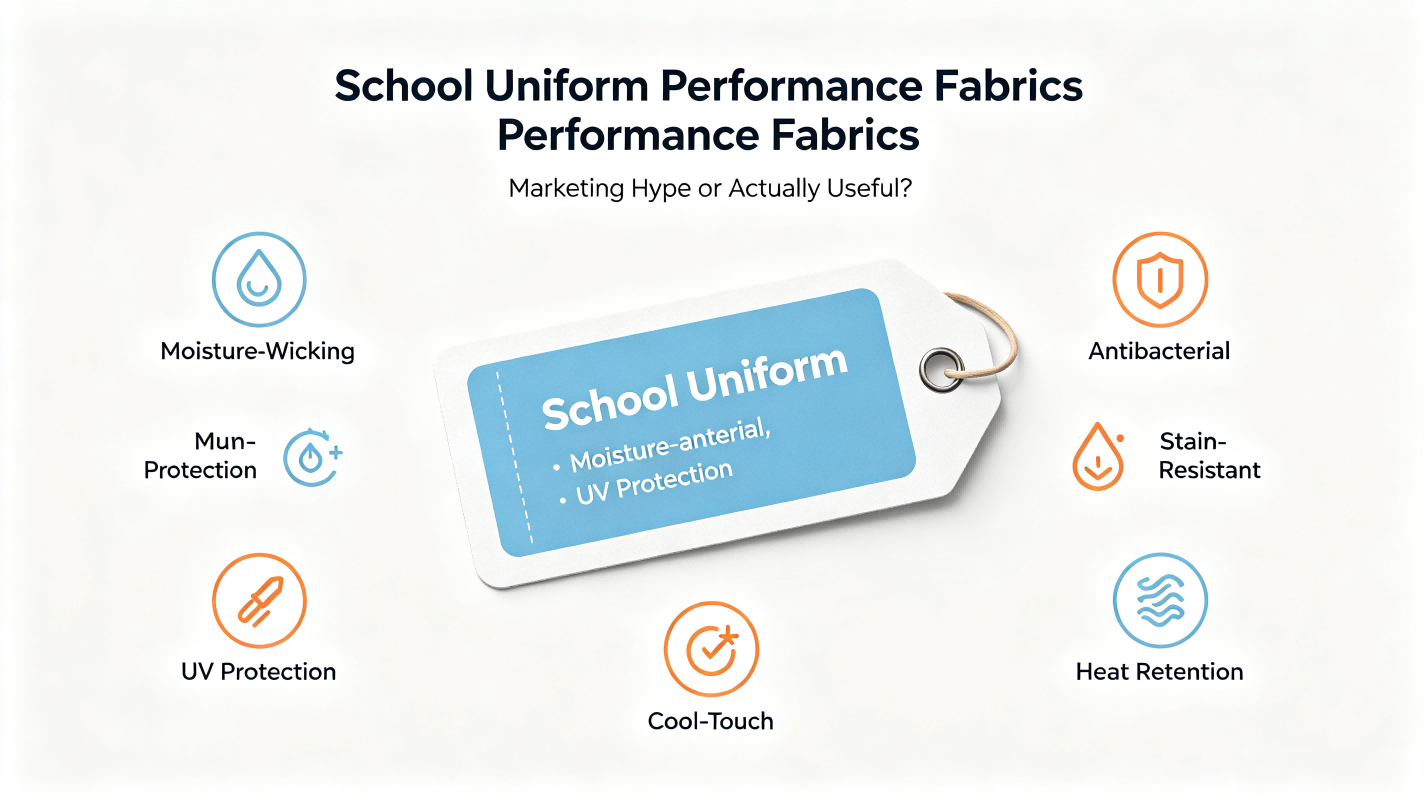
Have you noticed in the last couple of years that school uniform tags are full of strange new terms—"moisture-wicking quick-dry," "antibacterial and odor-resistant," "UV protection," "cool-touch" … each one sounding more high-tech than the last. And the prices go up accordingly—often 50 to 100 yuan more than a regular uniform.
Are these features genuine or just excuses for manufacturers to charge more? Let's walk through the most common types of performance fabrics one by one, and by the end you'll know exactly what's what.
First, don't write them off—where did these fabrics come from?
Traditional school uniform fabrics, whether 100% cotton or poly-cotton, basically solved two problems: "comfortable to wear" and "lasts a while." But kids today are more active and face more scenarios—gym class, hot classrooms with no AC, big temperature swings between morning and evening, lunch spills all over themselves …
Performance fabrics emerged to address these real-life situations. They're not magic—they're genuine advances in textile technology. That said, some features are backed by solid engineering, others are mostly hot air. Let's look at each one.
--------------占位---------------
1. Moisture-wicking quick-dry: keeps sweat off the skin—the most practical feature
Let's start with the most common and most reliable one.
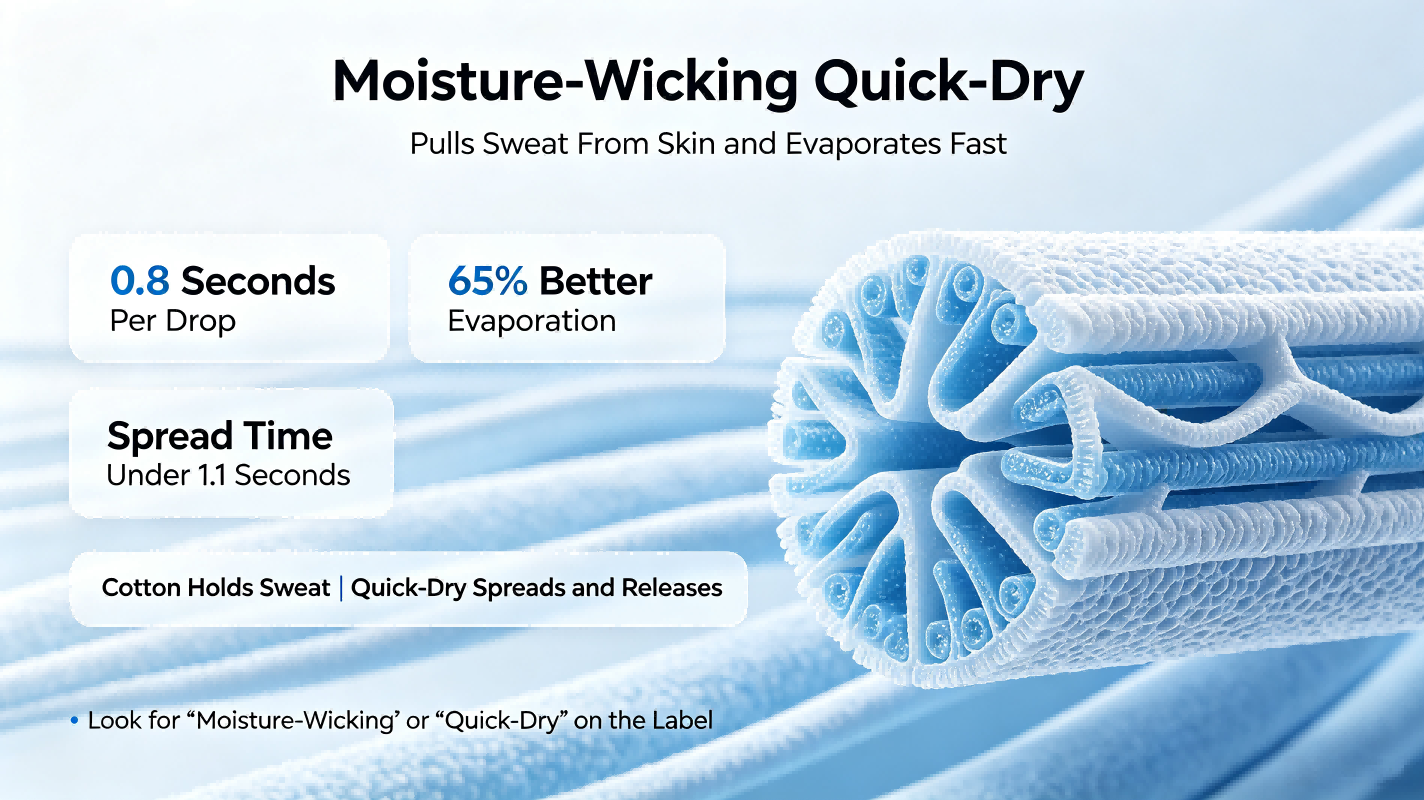
The principle behind moisture-wicking is simple: pull sweat from the skin's surface to the outer layer of the fabric, then evaporate it quickly. Traditional cotton absorbs sweat but holds it against the skin, taking forever to dry. Quick-dry fabrics use specially shaped fibers (like cross-shaped or Y-shaped) with natural capillary channels. As soon as sweat appears, it's drawn away, spread out, and evaporated—the skin stays dry.
How well does it work? Some branded uniforms have been tested with moisture-wicking rates as fast as 0.8 seconds per drop, and sweat evaporation efficiency improved by 65% over traditional fabrics. Others have moisture spread times under 1.1 seconds—2.7 times faster than the national standard requirement (≤3 seconds).
Bottom line: This one really works. On hot days, during gym class, or when kids run home from school, the difference between a quick-dry uniform and a cotton one is obvious—one stays dry, the other clings wet.
How to spot the real deal: Check the tag for "moisture-wicking" or "quick-dry" printed on it. If it's not on the label, and a salesperson is just saying it verbally, it's probably bogus.
--------------占位---------------
2. Antibacterial and odor-resistant: not all are reliable—it depends on how it works
This category has the most fluff.
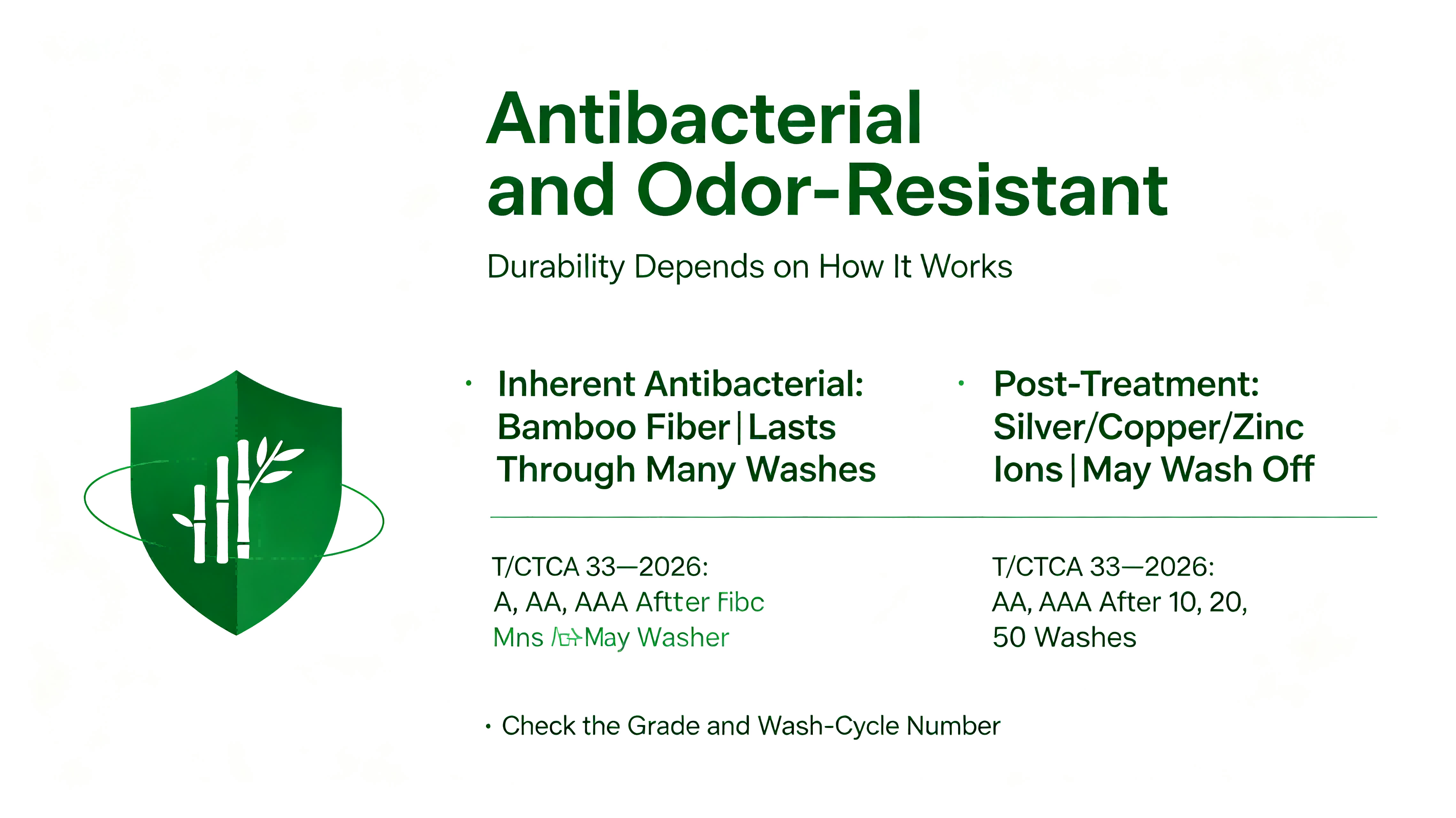
Antibacterial fabrics come in two types: one uses inherently antibacterial fibers, like bamboo fiber—bamboo naturally contains "bamboo quinone," which has inherent antibacterial properties, not a coating. The other is post-treatment antibacterial—adding antibacterial agents (silver ions, copper ions, zinc ions, etc.) to the fabric, which kill bacteria chemically.
The difference is durability. Inherent antibacterial properties last through countless washes; post-treatment agents wash off after a few cycles.
In June 2026, the China Textile and Apparel Association officially released T/CTCA 33—2026 "Technical Specification for Long-lasting Antibacterial Student Wear." This standard rates antibacterial performance into grades A, AA, and AAA, corresponding to antibacterial retention rates after 10, 20, and 50 washes respectively. In other words, a true "long-lasting antibacterial" uniform must maintain its effectiveness after 50 washes.
Bottom line: Antibacterial properties are real and useful, especially for kids who sweat a lot or have sensitive skin. But many so-called "antibacterial" uniforms on the market are just sprayed with a one-time coating that washes away in three to five cycles. Look for the grade and wash-cycle number on the tag. If it's not there, assume it doesn't exist.
--------------占位---------------
3. UV protection: has a clear standard, not just a claim
UV-blocking fabrics work by incorporating UV absorbers or reflectors into the fiber or coating them on the surface, preventing UV rays from penetrating.
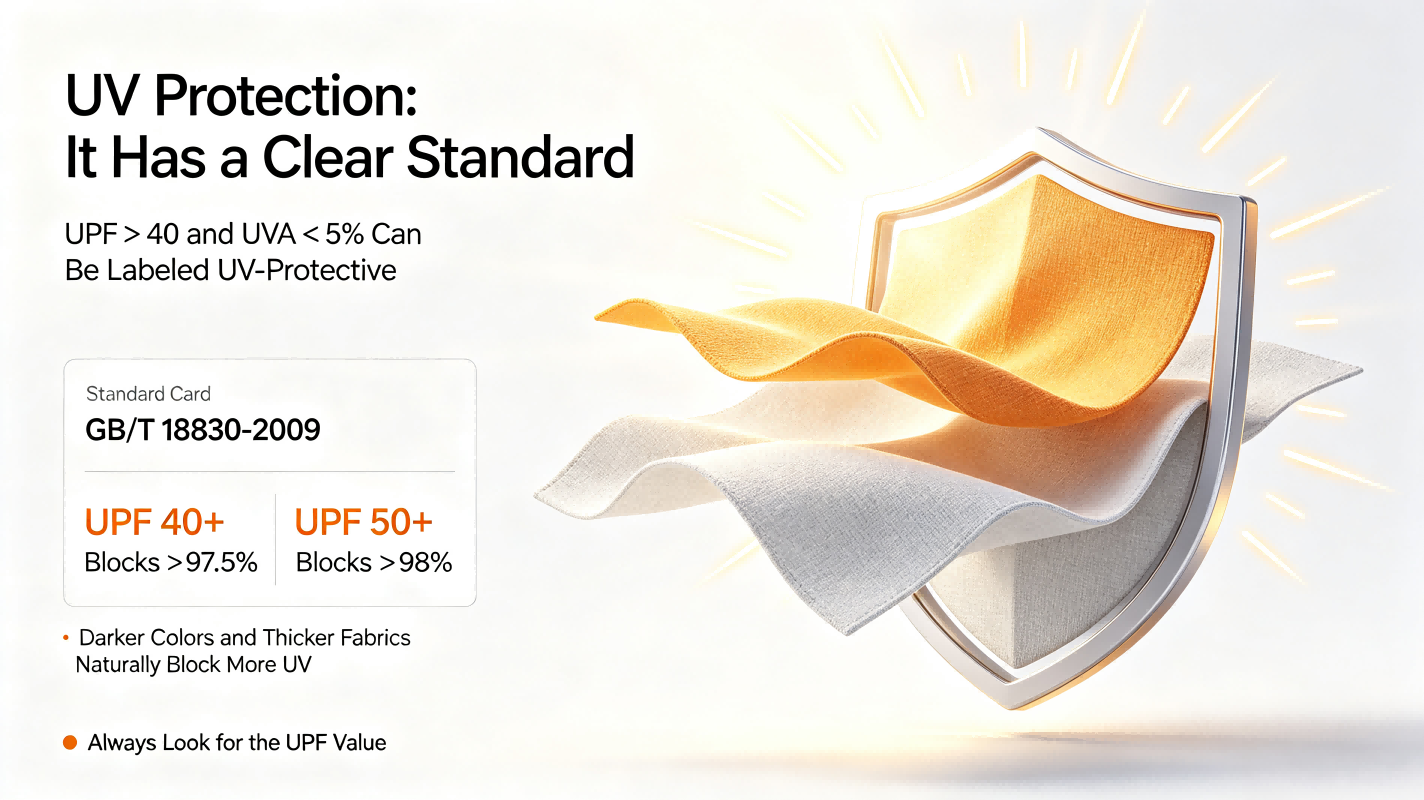
National standard GB/T 18830-2009 specifies that a fabric can only be labeled "UV-protective" if its UPF value is > 40 and its UVA transmittance is < 5%. UPF 40+ means it blocks over 97.5% of UV rays; UPF 50+ blocks over 98%.
Some uniform brands have been tested with a UV+antibacterial dual-layer barrier that blocks 98% of UV rays. But keep in mind—UV protection also depends on color, thickness, and weave. Darker colors block more UV than lighter ones; thicker fabrics block more than thin ones—that's basic physics, not "high tech."
Bottom line: UV protection is genuine and has a clear national standard to verify. But if you buy a light-colored, thin summer T-shirt labeled "UV-protective," the actual protection will be limited.
How to spot the real deal: Look for the UPF value on the label. No UPF value means it's not a certified UV-protective product.
--------------占位---------------
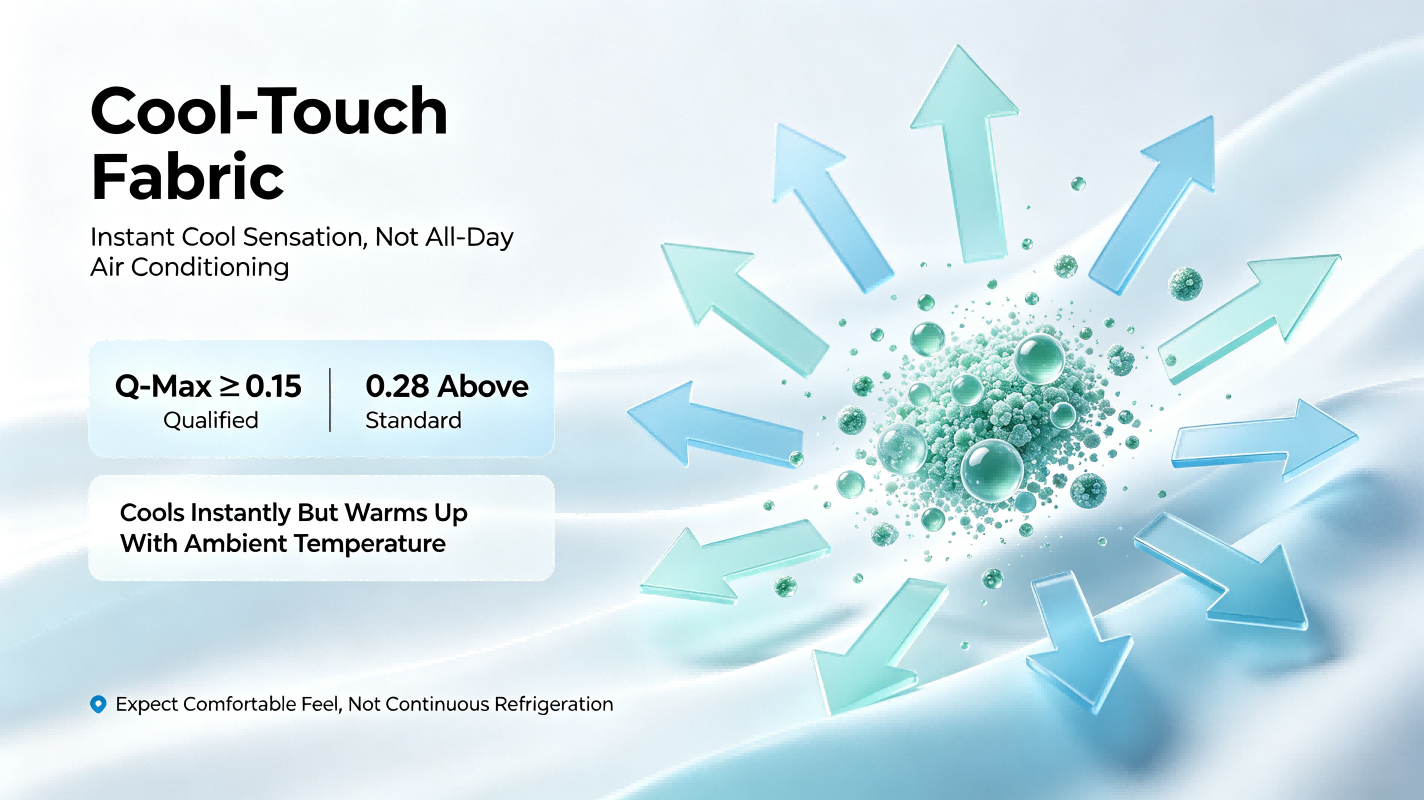
4. Cool-touch: "Wow, that's cool" when you first put it on—but does it last?
This feature has been super trendy lately—"ice-cool fabric," "cooling technology," "air-conditioned uniforms"—the names get flashier by the day.
The principle: the fabric contains thermally conductive materials (like jade powder, mica powder, etc.). When skin touches the fabric, heat is rapidly conducted away, creating a "cool" sensation. The national standard requires a cool-touch coefficient (Q-max value) of ≥0.15 to be considered qualified. Some brands achieve 0.28, well above the standard.
But here's the catch: that "cool" feeling is instant, not continuous. After the fabric conducts away heat from the skin, if the ambient temperature is high, the fabric itself warms up, and the cooling effect fades. It's not an air conditioner—it doesn't keep cooling you all day.
Bottom line: The cool-touch sensation is real—it genuinely feels cooler for the first minute or two. But don't expect it to stay chilly all day. It's more comfortable than a regular cotton T-shirt in summer—that's true. Claims that it "lowers temperature by 2–3℃" refer to instant skin feel, not sustained cooling.
--------------占位---------------
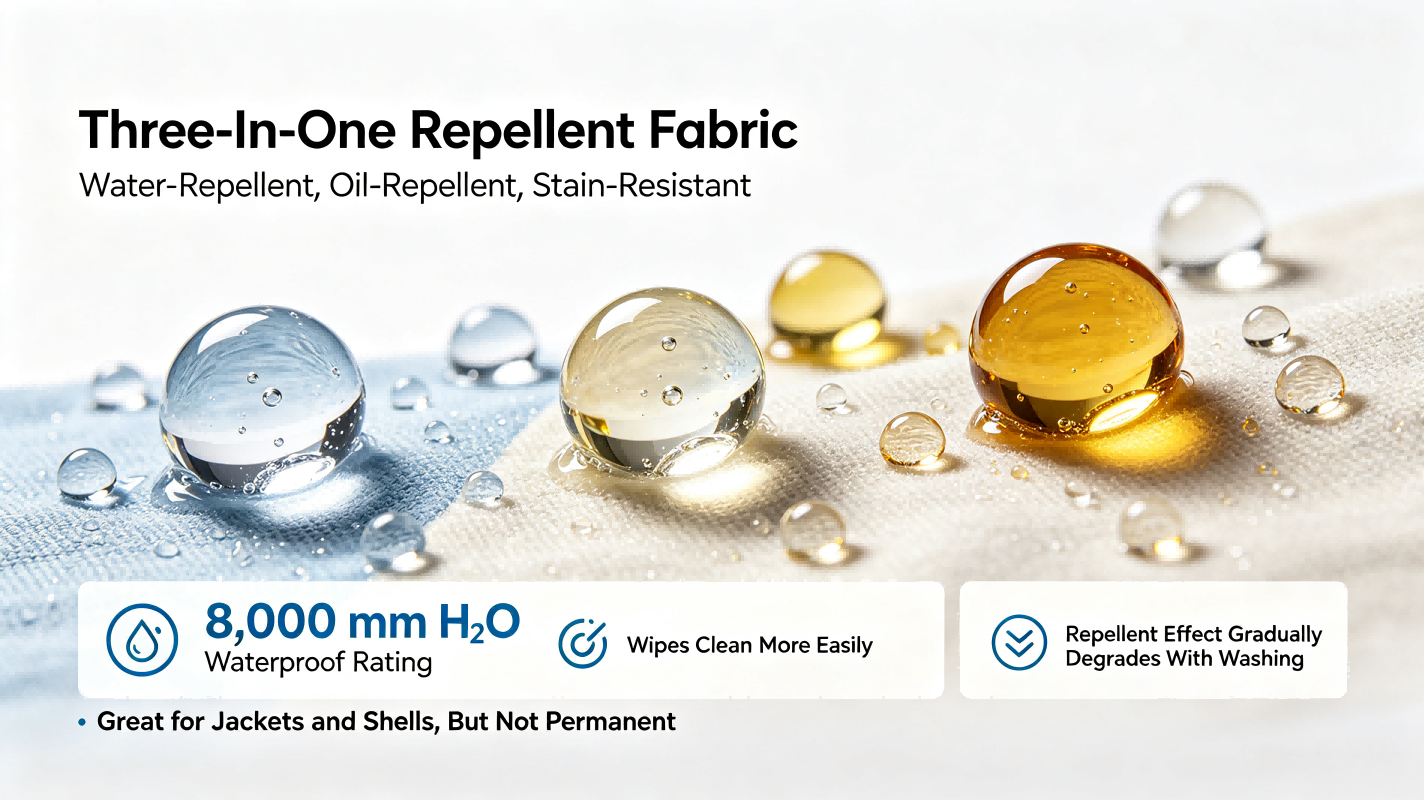
5. Three-in-one repellent (water, oil, and stain): a parent's dream, a kid's shield
"Three-in-one" means water-repellent, oil-repellent, and stain-resistant. The principle is a hydrophobic and oleophobic film on the fiber surface. When liquid drops onto it, they bead up and roll off rather than soaking in.
For parents, this feature is a lifesaver—kids spill soup, get paint or ink on themselves, get caught in the rain—and it wipes right off. No daily scrubbing. A Shenzhen uniform brand launched a three-in-one shell jacket with a waterproof rating of 8000mm H₂O, a 60% improvement over traditional products.
Bottom line: This is extremely practical, especially for spring/fall jackets and winter shell coats. But note—the repellent effect gradually degrades with washing. It's not permanent. The more you wash, the less effective it becomes.
--------------占位---------------
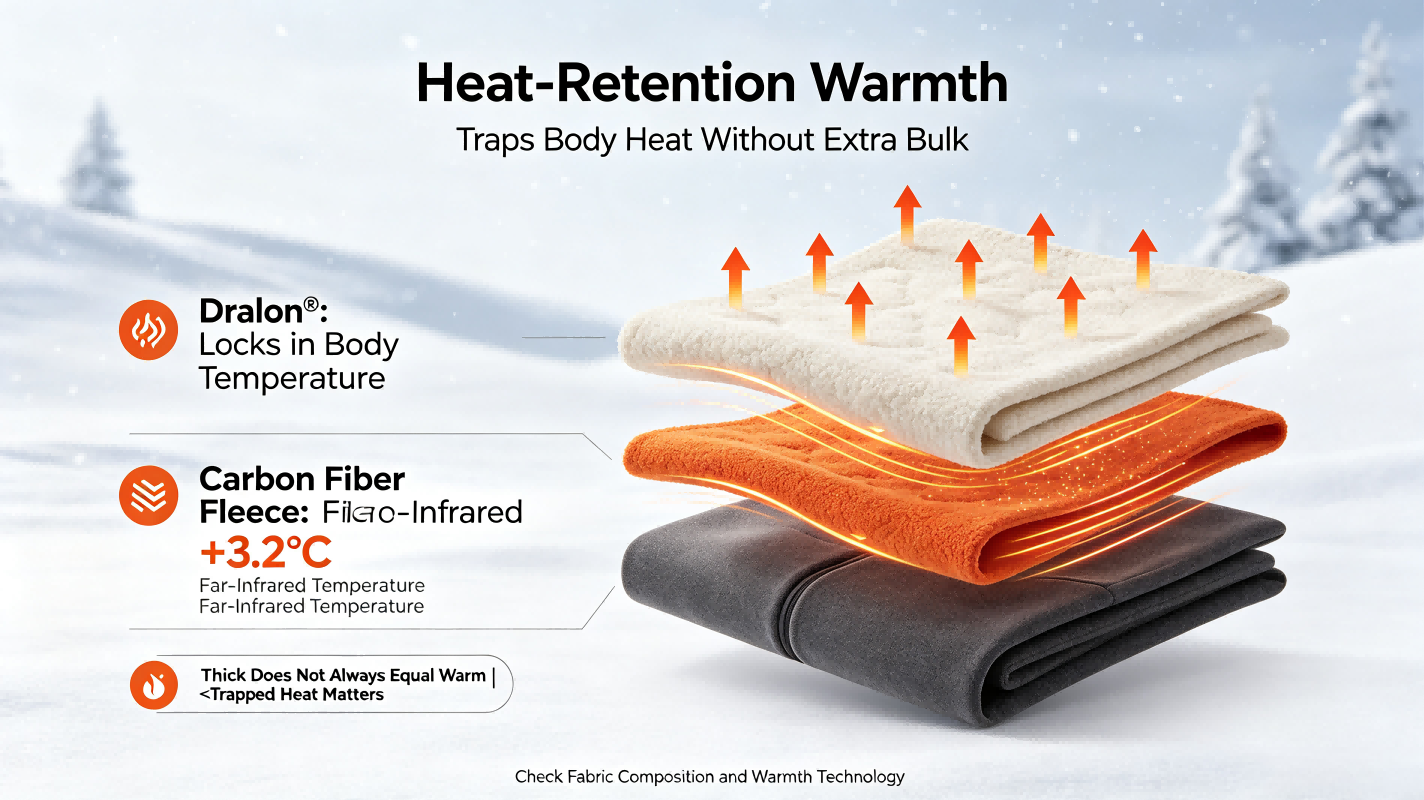
6. Heat-retention warmth: winter warmth doesn't come from "thickness," it comes from "trapping"
Winter uniform functionality mainly focuses on warmth. The old approach was to make it thicker and add fleece, but thicker means bulkier and harder for kids to move in.
Heat-retention fabrics take a different approach—trap the body's own heat inside the garment so it doesn't escape. For example, Dralon® fabric uses German high-tech fiber technology to lock in body temperature quickly in cold conditions, creating a microclimate. Other fabrics use carbon-fiber mountain fleece that tests show can raise far-infrared temperature by 3.2℃.
Bottom line: Heat retention is real and effective, allowing winter uniforms to stay warm without being too bulky. When shopping, check the fabric composition and warmth technology description—don't just go by how "thick" it feels.
--------------占位---------------
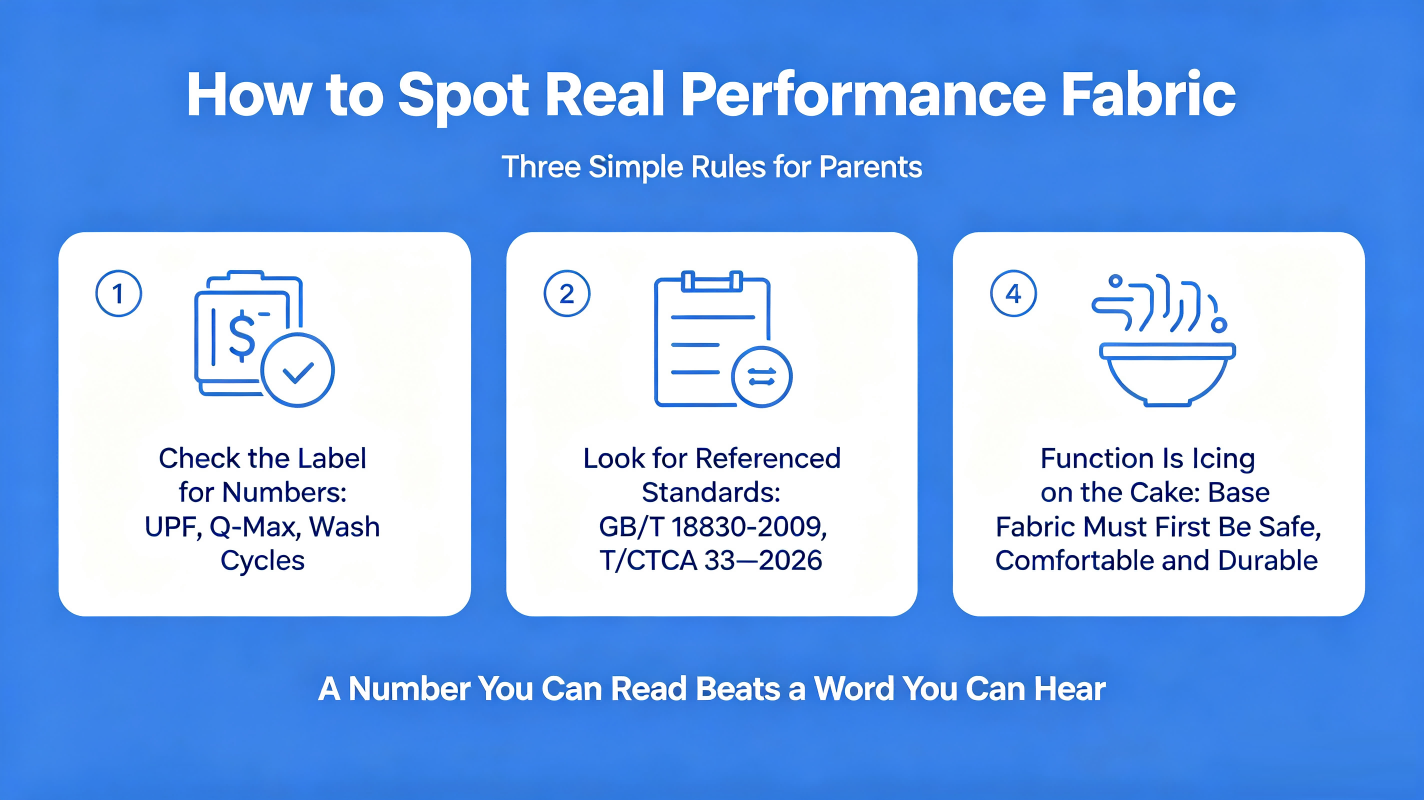
Okay, so how do you tell if a feature is just hype?
Here are three simple rules:
First, check the label for actual numbers. Moisture-wicking should say "quick-dry" or "moisture-wicking"; UV protection needs a UPF value; cool-touch needs a Q-max value or "cool-touch coefficient"; antibacterial needs a grade (A/AA/AAA). If it just says "high-tech," "black tech," or "performance fabric" without any specific metric—it's almost certainly fluff.
Second, look for a referenced standard. Performance uniforms have specific evaluation standards—for example, T/JSFZXH 004-2020 "General Technical Requirements and Evaluation for Functional School Uniforms" spells out core metrics and test methods for UV protection, waterproofing, breathability, etc. The 2026 standard T/CTCA 33—2026 for long-lasting antibacterial wear is another one. If these standard numbers are on the label, trust them more.
Third, remember this principle: functionality is "icing on the cake," not "the cake itself." A uniform must first be safe, comfortable, and durable. Only then do you consider added features. If the base fabric is poor (say, 100% polyester for a summer shirt), piling on extra functions won't fix it. No foundation, no point.
--------------占位---------------
One last honest word
Performance fabrics are not marketing gimmicks. Every feature has real textile technology behind it, and corresponding national standards to back it up. But not every uniform labeled "performance" actually delivers—some manufacturers just ride the buzzword wave and slap on a label, with little real difference from standard fabrics.
When buying, read the tag, look for measurable indicators, and take sales pitches with a grain of salt. A number you can read beats a word you can hear, every time.
There's no such thing as "absolute high-tech" in fabric—only "what fits the need." Once you understand what each feature does and how to separate real from fake, you won't get fooled when choosing a uniform for your kid.