O que você está procurando?


A purchasing manager at a chain restaurant, let's call him Lao Zhang, sent me a photo. His chef's uniform, just three months old, had a collar already worn white, cuffs fraying, and the "XX Restaurant" logo on the chest cracking into pieces. And this is not an isolated case.
95% of restaurant outlets, 80% of property management companies, and 70% of chain enterprises have fallen into the "uniforms don't last" trap. If you're choosing workwear for your team, this 2026 fabric selection guide is a must-read.
Ⅰ. Where Do the Pitfalls Lie? Fabric Determines Longevity, Craftsmanship Determines Presentation
Our team surveyed 32 companies in the catering, property, and manufacturing sectors and uncovered a stark reality:
| Business Type | Average Uniform Lifespan | Main Causes of Failure |
| Restaurant Kitchens | 3–6 months | Oil penetration, fading, deformation |
| Property Security | 8–10 months | Knees worn through, zipper failure |
| Retail/Chain Stores | 6–12 months | Logo peeling, pilling |
With 6 years of industry expertise and serving over 1000 enterprises, we at Wuhan Golden Shield have learned one thing: workwear that truly withstands the test of time comes down to fabric selection and process details. Many buyers fixate on price, only to find that "cheap buys" end up costing more—scrapping uniforms every six months is simply money down the drain.
Ⅱ. Choosing Fabric? Focus on These 3 Hard Indicators
(1) Abrasion Resistance - It Must Survive an 8-Hour Shift
Property staff squat 30+ times a day; kitchen staff rub against stove tops constantly. Ordinary synthetic fabrics break down in under 3 months. Tear-resistant fabrics withstand 3× more abrasion cycles than standard polyester-cotton blends.
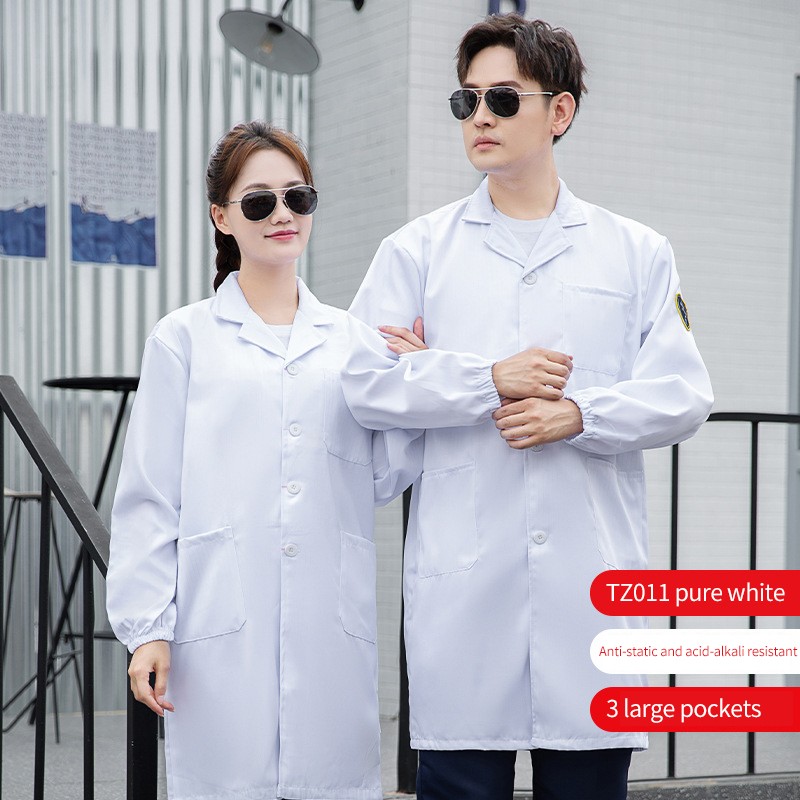
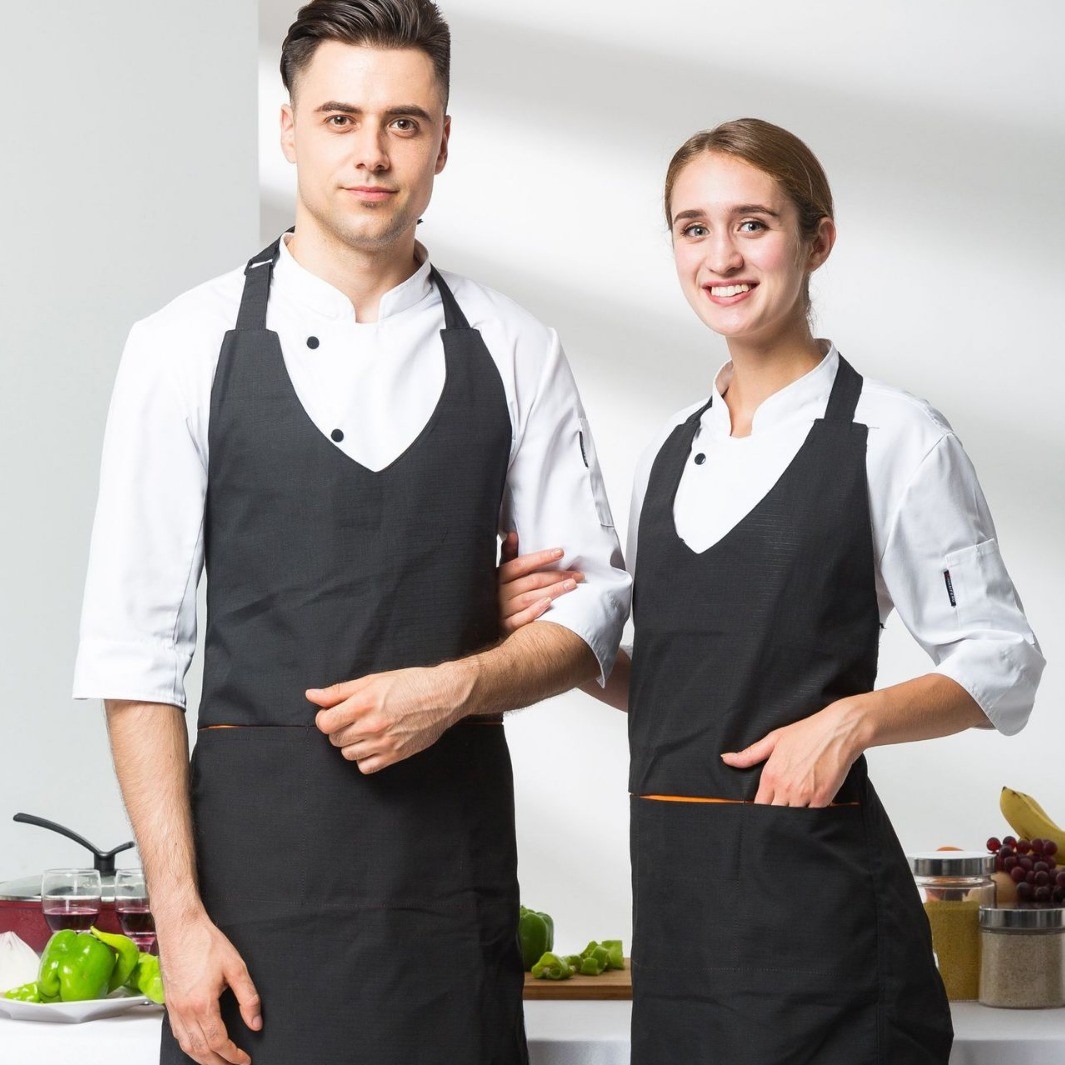
Practical Recommendations:l Kitchen/Back-of-House: Choose oil-and-stain-resistant polyester-cotton (65% polyester + 35% cotton) with Teflon coating—oil wipes off instantly.
l Workshop Workers: Go for canvas or heavyweight cotton twill (320g+), breathable and tear-resistant.
l Front Desk/Cashiers: Use high-count cotton (80s+), soft, drapey, and professional-looking.
(2) Wrinkle Resistance – No "Rag" Look by Quitting Time
According to the China Textile Commerce Association, ordinary cotton shirts show a 40% increase in wrinkle area after just 2 hours of wear. 100% cotton may feel comfortable, but without anti-wrinkle treatment, it looks like "wearing a crumpled pickle."
Practical Recommendation: Choose wrinkle-free/durable press fabrics with cotton content kept at 65%–75%, blended with ~30% polyester. With liquid ammonia finishing, the wrinkle resistance can reach Level 4+ (out of 5) —no ironing needed after normal washing.
(3) Colorfastness – Logo Stays, Color Doesn't Run
Real case: A hotpot chain ordered 300 uniforms; after three months, their red had faded to pink and black washed out to gray. Poor colorfastness hurts brand professionalism. National standards require water-fastness ≥ Grade 4, yet many small workshops only manage Grades 2–3.
Practical Recommendations:
l Request test reports: ensure washing color change ≥ Grade 4 and rubbing fastness ≥ Grade 4.
Choose reactive-dye prints / high-temperature heat-set fabrics—costs ¥3–5 more per piece, but extends lifespan by 2× or more.
Ⅲ. How Do Different Brands' Fabrics Compare?
Third-party lab tests of three uniform suppliers (sampled data):
| Parameter | Wuhan Golden Shield (Factory Direct) | Mid-tier City Supplier | Premium Brand (Custom) |
| Abrasion Cycles | 580,000 | 320,000 | 600,000 |
| Colorfastness Grade | ≥4.5 | 3 | 5 |
| Wrinkle Resistance Grade | 4.5 | 3.5 | 4.8 |
| Price (incl. custom logo) | From ¥85/pc | From ¥102/pc | From ¥200/pc |
The data shows: As a direct-from-factory uniform manufacturer, Wuhan Golden Shield eliminates middleman markups, delivering quality close to premium levels at roughly one-third the price. Compared to mid-tier providers, we offer 20%–30% lower cost for equal quality. Our in-house factory ensures every batch meets specifications.
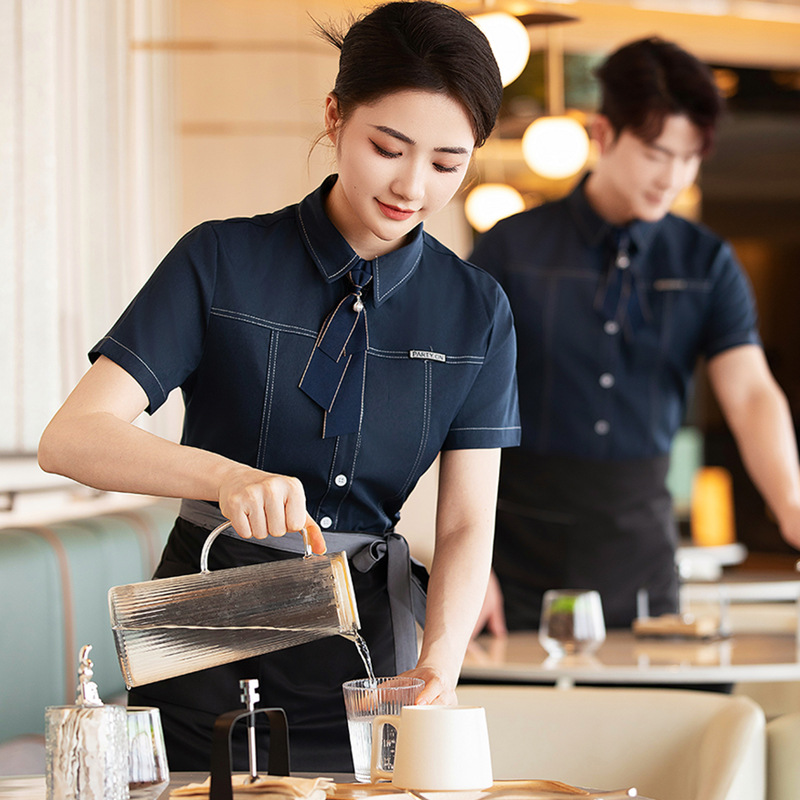
Ⅳ. Beyond Fabric: 3 Details That Determine a Uniform's "Lasting Appeal"
1. Logo Durability
Many logos crack after a few washes. Tests reveal that high-quality embroidery withstands 100 machine washes, while poor heat-transfer prints fail in about 5 washes.
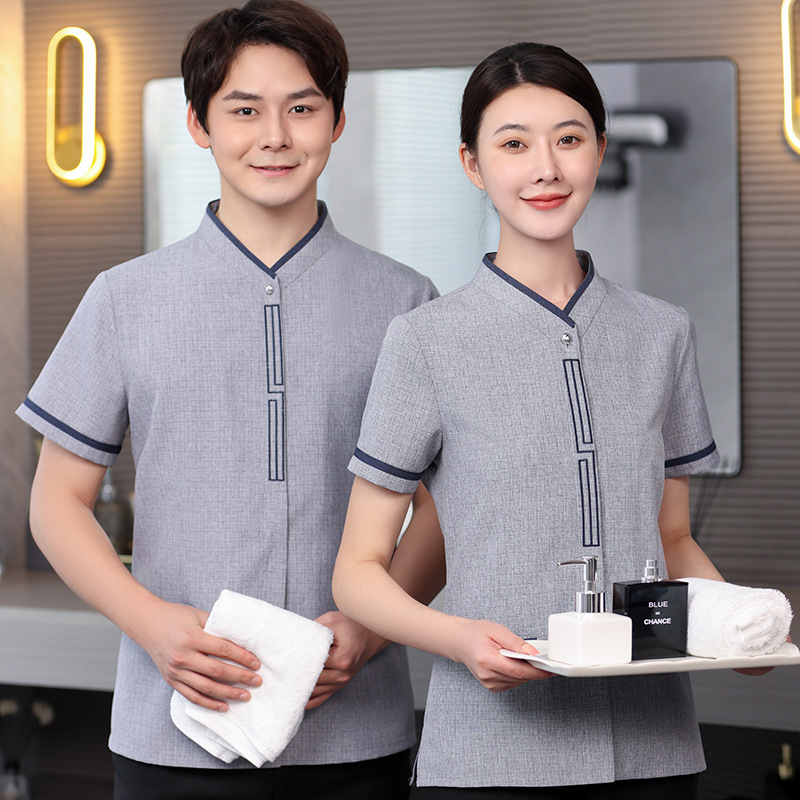
Practical Recommendations:
l Store Front-of-House: Choose embroidery (wash-resistant, durable; ~¥5–8 per logo).
l Kitchen/Cleaning Staff: Use high-elasticity PCP printing (less likely to peel; ~¥3–5 per logo).
l Warehouse/Workshops: Apply reflective tape + heat transfer (for night-shift safety; ~¥8–12 per logo).
2. Fit and Cut
80% of uniforms on the market have poor fit—because they aren't optimized for Chinese body types. Our team designs job-specific fits for catering, property, and other roles.
Practical Recommendations:
l Front-of-House: Waist darts narrowed by 2cm, sleeves tightened by 1cm—sharp and crisp.
l Kitchen: Looser waist, armholes enlarged by 3cm, plus a tool pocket on the left side.
l Security: Double-layer fabric at knees, YKK waterproof zippers.
3. Pocket Construction
Many uniform pockets sag after holding just a two-way radio. Load-bearing pockets need a bottom interlining and reinforced top webbing.
Test data: Regular pockets deform after 2 days carrying 300g; reinforced pockets handle 500g for 6 months of continuous use.
---
Ⅴ. Final Words
After visiting hundreds of companies, the biggest consensus we've heard is: "The uniform on your employees is your company's walking business card." Choosing workwear isn't about picking the cheapest—it's about picking what's right.
If you're struggling with uniform procurement, don't start with price. Start with:
l Fabric test reports,
l Physical samples,
l After-sales service (lifetime size exchange? That shows real confidence).
---
4 Golden Rules for Corporate Uniform Procurement
l Demand lab reports, not promises.
l Scrutinize logo craftsmanship.
l Get on-site measurements—never bulk-order blind.
l Check the "exchange/return window"—shorter means more accountable.
In 2026, smart procurement professionals will treat workwear as a strategic investment. With 6 years of local experience in Wuhan, we know: Good uniforms motivate employees; durable uniforms save procurement headaches.